


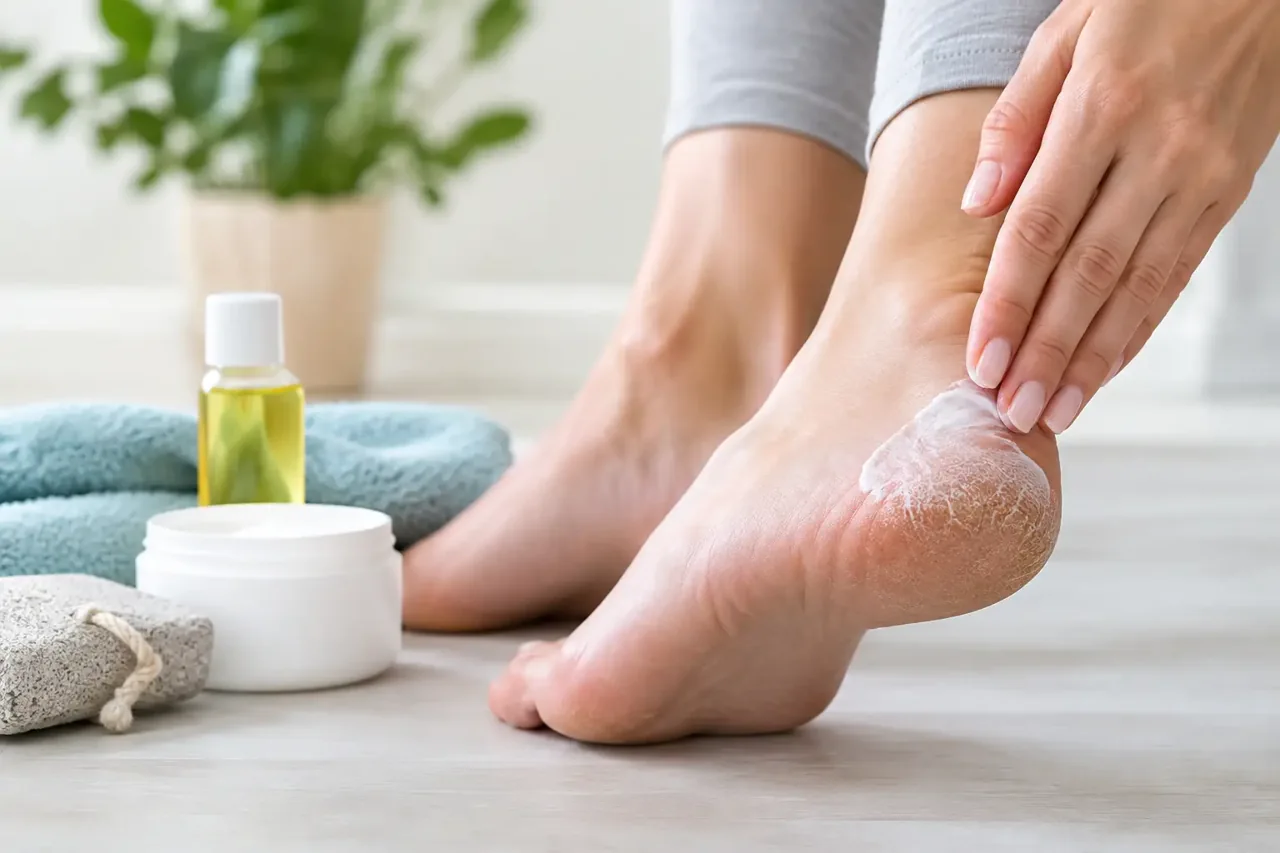
How to Treat Cracked Heels Safely and Effectively
A heel fissure can begin as dry, rough skin and quickly become painful when the skin splits under pressure. Knowing how to treat cracked heels involves more than applying a moisturiser when they feel sore. Effective care reduces hard skin safely, restores moisture and identifies the reason the heels keep breaking down.
For some people, cracked heels are mainly a skin-care issue. For others, they are linked to pressure, footwear, an inflammatory skin condition or a medical condition that requires more cautious management. The right approach depends on how deep the cracks are, whether there is pain or bleeding, and your wider health.
Why heels crack
The heel naturally takes a high load when standing and walking. When its skin becomes dry and thickened, it loses flexibility. As the heel spreads slightly with each step, rigid skin can split, creating fissures at the edge or base of the heel.
Dry skin is a common contributor, particularly during colder months, after frequent bathing, or when open-backed footwear leaves the heel exposed. However, dryness is rarely the whole explanation. Hard skin, known clinically as callus, develops where pressure and friction are greatest. If that callus is not managed, it can form a hard rim around the heel that is more likely to crack.
Being on your feet for long periods, carrying extra body weight, wearing poorly fitting shoes or sandals, and walking barefoot can all increase heel pressure. Eczema, psoriasis and fungal skin infections may also cause scaling and fissuring. People with diabetes, reduced circulation or loss of sensation in their feet should not assume a cracked heel is a minor problem, as skin breaks can carry a higher risk of infection and may be slower to heal.
How to treat cracked heels at home
If the cracks are superficial, not bleeding and there are no concerns about circulation or sensation, consistent home care can usually improve the skin over several weeks. The aim is to soften thickened skin gradually, not to remove it aggressively in one session.
Use a heel moisturiser with an active ingredient
A standard body lotion may feel pleasant but is often not enough for thick, cracked heel skin. Choose a foot cream containing urea, which helps draw moisture into the skin and soften callus. Products with around 10 to 25 per cent urea are commonly suitable for regular dry skin; stronger preparations may be appropriate for more significant hard skin when advised by a podiatrist.
Apply the cream daily, ideally after washing and drying your feet carefully. Work it into the heel and the surrounding dry skin, but avoid putting heavy cream between the toes, where excess moisture can encourage fungal infection. Wearing clean cotton socks after application can help keep the cream in contact with the skin overnight.
Consistency matters more than applying a large amount once. A daily routine for two to four weeks is usually more effective than occasional intensive treatment.
Reduce hard skin gently
After bathing or showering, when the skin is softened, use a foot file gently on areas of hard skin. Do not file until the skin becomes tender, pink or sore. The purpose is to reduce the rigid surface little by little so that the heel can flex normally.
Avoid blades, scalpels, corn plasters or harsh chemical removers at home. Cutting hard skin can create a wound, particularly if you cannot see or reach the area clearly. Electric foot files can also cause friction burns or over-thinning if used too firmly. If the hard skin is substantial, painful or repeatedly returns, professional podiatric care is the safer option.
Protect the fissures while they heal
Painful cracks can widen with every step. Closed-back, supportive shoes reduce direct pressure and friction better than flip-flops or thin, open-backed slippers. A cushioned heel cup or suitable insole may help some people by spreading pressure, although it will not resolve the underlying callus on its own.
If a fissure is shallow, keeping it moisturised and protected can be enough. For a deeper crack, a podiatrist may use an appropriate dressing or skin closure method after assessing the area. Do not apply adhesive strips to a crack that is bleeding, weeping, infected or surrounded by fragile skin without clinical advice.
Address the cause, not only the dry skin
Recurring cracked heels often indicate that the heel is being overloaded or that the skin condition has not been identified correctly. A person who stands all day in worn work shoes may need a different plan from a runner whose heels crack after long training sessions. Equally, scaling across both feet, especially around the soles and sides, may suggest athlete’s foot rather than simple dryness.
Look at footwear first. Shoes should have enough depth and width at the heel, stable support and a back that holds the foot in place. If the sole is unevenly worn or the heel shifts excessively in the shoe, pressure may be concentrated in one area. Replacing worn footwear can be as useful as changing your foot cream.
Persistent callus may also reflect the way you walk, foot shape, reduced ankle movement or pressure from a deformity. In these cases, repeatedly filing the heel gives only temporary relief. A podiatry assessment can identify where the load is occurring and whether footwear advice, padding, orthoses or another treatment is appropriate.
When cracked heels need professional assessment
Arrange an assessment promptly if the crack is deep, bleeding, very painful, swollen, hot, red, leaking fluid or producing an unpleasant smell. These symptoms may indicate infection or tissue damage that should not be managed with home remedies alone.
You should also seek professional advice before filing or using medicated foot products if you have diabetes, peripheral arterial disease, neuropathy, poor circulation, kidney disease, an immune condition, or a history of foot ulcers. Reduced sensation means a small injury may go unnoticed. Reduced blood flow can delay healing, so early review is preferable to waiting for a crack to deteriorate.
A podiatrist can remove hard skin precisely, assess the depth and condition of fissures, and consider whether there is an underlying dermatological, mechanical or circulatory factor. If pain, altered walking or a lower-limb issue is contributing to repeated pressure, assessment can be extended beyond the skin itself. At South London Foot Clinic, treatment planning begins with a clear examination so that care is matched to the cause rather than limited to short-term removal of hard skin.
Common mistakes that delay healing
The most frequent mistake is treating the heel only when it becomes painful. Once a fissure has formed, the skin needs regular moisture and pressure reduction to regain flexibility. Stopping treatment as soon as the heel looks smoother often allows callus to build again.
Another mistake is soaking feet for long periods. Brief washing is fine, but prolonged soaking can strip natural oils and leave skin drier afterwards unless moisturiser is applied promptly. Very hot water may worsen this effect.
It is also worth avoiding the temptation to peel, pick or cut loose skin. Although it can feel satisfying, this can turn a superficial crack into an open wound. If skin is catching on socks or painful when walking, it is better to have it reduced safely.
Keeping heels comfortable after they improve
Once the cracks have closed, reduce your routine rather than stopping it completely. Applying a urea-based cream several times a week, filing gently when needed and wearing supportive shoes will help prevent the cycle of callus and fissuring from returning.
Check your heels regularly, especially if you are less able to reach your feet easily or have reduced sensation. A small dry patch is far easier to manage than a painful split. With early care and a clear understanding of why the pressure is occurring, most cracked heels can become comfortable, resilient and easier to keep that way.