


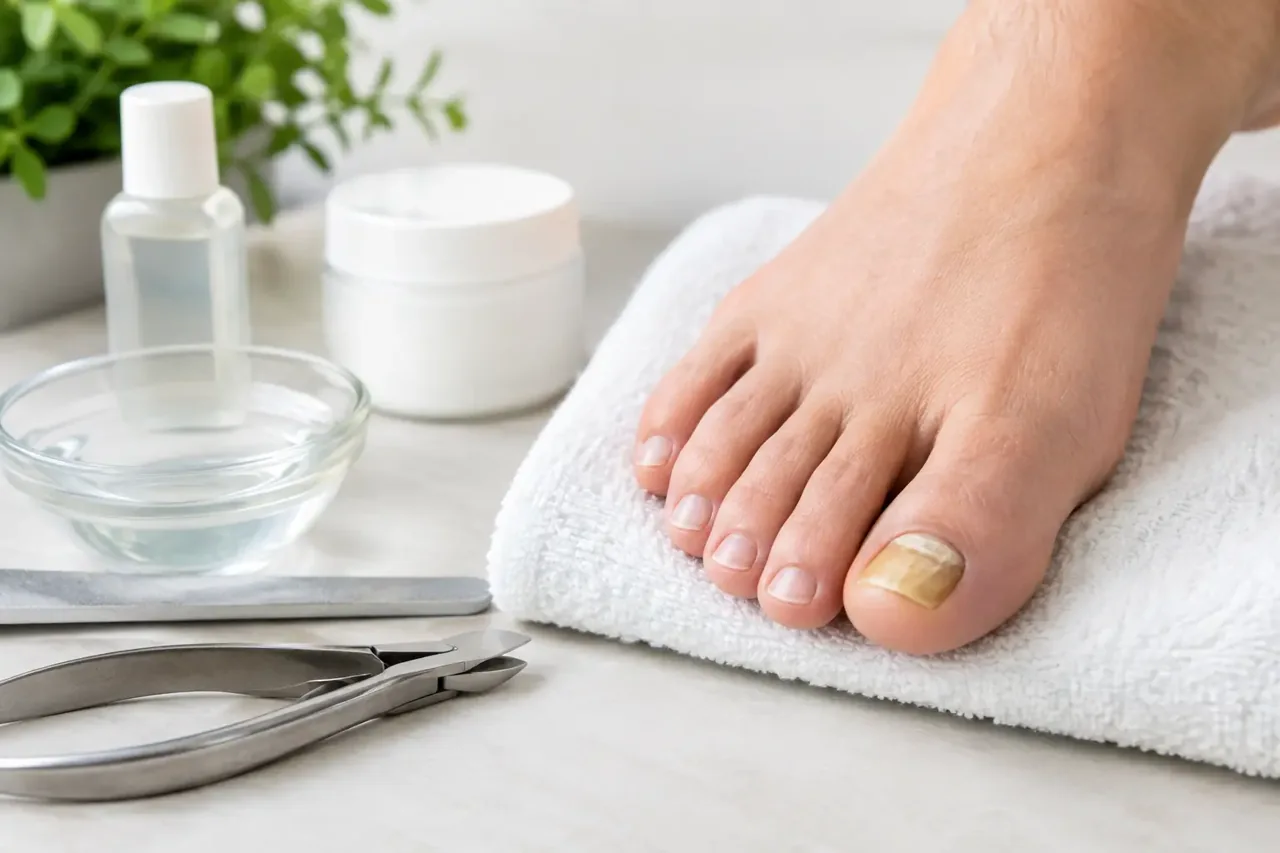
Thick Toenail Treatment Options That Work
A thick, hard or misshapen toenail can make ordinary shoes uncomfortable, catch on socks and become increasingly difficult to cut safely. Thick toenail treatment options depend on why the nail has changed. A fungal infection is common, but previous injury, repeated pressure from footwear, skin conditions and circulation or health concerns can also alter the way a nail grows.
The most useful first step is a podiatry assessment. Rather than treating every thick nail as fungus, a clinician will examine the nail, surrounding skin and foot health, ask about changes over time, and identify the treatment that is most likely to help. This prevents months of ineffective products and helps protect the nail and skin from avoidable damage.
Why toenails become thick
Toenails grow slowly, so changes often develop gradually. The nail may become yellow, white, brown or opaque, with a rough surface or crumbly material beneath it. It may also lift away from the nail bed, curve inwards at the sides, or become painful when pressure is applied.
Fungal nail infection, known clinically as onychomycosis, is one possible cause. It can begin at the edge of the nail and progress slowly, particularly where there is athlete’s foot, warm footwear, frequent sweating or repeated exposure to communal changing areas. However, appearance alone cannot confirm a fungal infection.
Repeated trauma is another common explanation. Runners, footballers, dancers and people who spend long hours on their feet may repeatedly knock the nail against the end of a shoe. A single significant injury can also disrupt the nail matrix, the area that produces the nail, resulting in long-term thickening or distortion. Psoriasis, eczema and other skin conditions can affect the nail as well.
Occasionally, a thickened or discoloured nail needs more urgent assessment. Seek prompt advice if a dark pigment band is new or changing, the nail is bleeding without explanation, there is persistent swelling or discharge, or the skin around the nail is very painful. People with diabetes, poor circulation, reduced sensation, immune suppression or a history of foot ulcers should not attempt to cut down a problematic nail themselves.
Thick toenail treatment options begin with assessment
A thorough assessment distinguishes between a nail that needs routine reduction, a suspected fungal infection requiring confirmation, and a nail that is structurally damaged or repeatedly ingrowing. Your podiatrist will consider the thickness of the nail, whether there is debris beneath it, the condition of the surrounding skin, footwear pressures and any relevant medical history.
Where fungus is suspected, a nail sample may be advised before systemic antifungal medication is considered. This matters because oral medication is not suitable for everyone and may require checks for interactions or liver-related risks. Confirming the cause makes treatment more targeted and avoids exposing patients to medication that is unlikely to work.
A consultation also provides an opportunity to identify practical contributors. Shoes with a shallow toe box can repeatedly compress the nail. Moisture held in socks and footwear can encourage fungal skin infection. Treating the nail while overlooking these factors makes recurrence more likely.
Professional nail reduction and debridement
For many people, the immediate priority is comfort. A podiatrist can carefully reduce the thickness and length of a nail using appropriate sterile instruments. This is often called nail debridement. It can reduce pressure in footwear, improve comfort when walking and make ongoing care more manageable.
Professional reduction is particularly helpful when nails are very hard, curved, brittle or difficult to reach safely. It is not, by itself, a cure for fungal infection or permanent trauma-related nail changes. It is a practical treatment that relieves symptoms while the underlying cause is addressed.
The frequency of follow-up depends on how quickly the nail grows, how much it thickens and whether there are other risks such as diabetes or reduced circulation. Some patients need periodic routine care; others need only occasional treatment after a specific injury.
Topical antifungal treatments
Antifungal nail solutions or medicated lacquers may be suitable when infection is mild, limited to part of the nail and has not reached the growth area. They are applied regularly over a prolonged period because a healthy toenail can take many months to grow through.
Topical treatment has the advantage of avoiding the systemic effects of oral medication. The trade-off is that it may be less effective for a very thick nail or an infection affecting most of the nail plate. Reducing the thickness of the nail professionally can sometimes improve access for a topical treatment, but it does not guarantee success.
Consistency matters. Stopping treatment once the nail looks slightly better can allow infection to persist beneath the visible surface. Treat athlete’s foot at the same time if it is present, as the skin can act as a reservoir for reinfection.
Oral antifungal medication
When a laboratory-confirmed fungal infection is more extensive, oral antifungal medication may offer the best chance of clearing it. These medicines work through the bloodstream as the new nail grows. A prescriber will assess whether they are appropriate based on your health, current medication and the confirmed diagnosis.
Oral treatment is not an instant solution. The infection may be treated before the damaged nail has fully grown out, so the nail can continue to look abnormal for many months. It is also possible for a nail to remain thick if previous trauma has permanently affected its growth, even after fungus has cleared.
Managing pressure, injury and footwear
If the thickening is linked to repeated shoe pressure or sport, treatment should include the cause of that pressure. A wider, deeper toe box can reduce impact at the front of the shoe. Socks that manage moisture and shoes that are fully dried between wears can support skin and nail health.
For active patients, it may be necessary to review training footwear, lacing and the fit of sport-specific shoes. A nail that repeatedly turns dark, lifts or thickens after activity is often signalling mechanical trauma. Continuing to press on with the same source of pressure can undermine every other treatment.
Where the nail is affected by an underlying skin condition, treatment may need to involve your GP, dermatologist or podiatrist, depending on the diagnosis. The aim is not simply to make the nail look better but to manage the process affecting its growth.
When nail surgery may be appropriate
Nail surgery is usually considered when part or all of a nail is persistently painful, severely deformed, repeatedly ingrowing or causing recurrent infection. It is not the routine answer for every thickened nail. However, it can be an appropriate long-term solution when conservative care has not controlled symptoms.
A common procedure involves removing the troublesome section of nail and treating the corresponding nail matrix so that section does not grow back. In selected cases, removal of the whole nail may be discussed. The right option depends on which part of the nail is causing the problem, the condition of the surrounding tissue and your overall health.
The procedure is carried out under local anaesthetic. Recovery involves dressing care, keeping the area clean and attending follow-up as advised. Your clinician should explain the expected healing period, likely appearance of the nail afterwards and any restrictions on activity before treatment goes ahead.
What not to do at home
It is tempting to cut aggressively into a thick nail, use sharp tools beneath it or try to file it down extensively. This can split the nail, damage the skin and create an entry point for infection. The risk is greater if you have diabetes, poor circulation, neuropathy or difficulty seeing and reaching your feet.
Over-the-counter antifungal products can be useful in the right circumstances, but they should not delay assessment when a nail is painful, rapidly changing, very thick or repeatedly catching. Avoid sharing nail clippers, and clean or replace files and footwear where fungal infection is suspected.
A clear plan is more useful than a quick fix
Thick toenails often improve gradually, not overnight. The most effective plan may combine professional reduction for immediate comfort, confirmation of the underlying cause, antifungal treatment where indicated and changes that reduce ongoing pressure or reinfection.
At South London Foot Clinic, assessment-led podiatry care can help establish why a nail has changed and whether routine treatment, medical management or nail surgery is appropriate. If your toenail is becoming painful, difficult to manage or persistently abnormal, a structured assessment can provide a safer and clearer next step.